
Meditation in a Busy World: What Actually Works in 2026
Table of Content
Meditation in a Busy World: Why the Old Rules No Longer Apply, and What Actually Works Now
Most people now check their phone within 90 seconds of waking. Sit with that for a second. The average sustained attention span on a screen, according to Gloria Mark's research at the University of California Irvine, is now roughly 47 seconds. The nervous system that traditional meditation was designed for, slow, agrarian, and largely undisturbed, is not the nervous system any of us are working with in 2026.

This matters if you teach. Yoga teachers, Pilates instructors, breathwork facilitators, sound healers, and meditation guides are sitting clients down and asking for stillness on a nervous system that has been pinged 200 times before lunch. The forty-five-minute silent sit, gold standard for decades, is now the format that loses people the fastest. Meditation in a busy world has to be designed differently. The research is finally catching up to that, and the practices holding up under modern life are clearer than they have been in years.
This piece is for the wellness professionals trying to teach meditation that actually sticks. The science, the formats that work, what is worth paying for, and the framework for building a meditation practice that holds up in a life full of noise.
The nervous system you are actually working with in 2026
Adobe's 2024 attention study put average focused work at under 90 seconds before a digital interruption. Microsoft's research found knowledge workers switch contexts roughly every 40 seconds. The dopamine cycling that comes from notifications, scrolling feeds, and content variety has rewired the baseline. Most clients walking into your studio or retreat space are sympathetically activated before they even sit down.
This shows up in your room. A client who would once have settled into a 30-minute meditation practice in week two now asks for a guided audio after eight minutes. They are not failing the practice. The format is failing them. A practice that suits a modern nervous system has to start where the system actually is, not where the tradition assumes it should be.
For teachers, this is a teaching opportunity. The practitioners who design for the current attention economy, who use shorter formats, mantra-based anchors, breath-led entries, and clear off-ramps, are the ones who keep clients coming back. The professionals still teaching as if it were 1985 are losing retention.

What the research says about modern meditation
The research stopped being soft about fifteen years ago. A few studies worth memorising if you teach.
Sara Lazar's 2011 Harvard study scanned the brains of participants before and after an eight-week mindfulness meditation programme. Grey matter density increased in the hippocampus (memory and learning) and decreased in the amygdala (fear and stress response). Eight weeks, twenty-seven minutes a day, real structural change.
Norman Rosenthal, the psychiatrist who first identified seasonal affective disorder, ran multi-year research on TM. His data showed cortisol reductions of roughly 30 percent in regular practitioners, with measurable drops in trait anxiety after three months. Twice-daily, twenty-minute sessions. No apps, no streaming.
A 2023 JAMA Psychiatry meta-analysis compared mindfulness-based stress reduction to escitalopram, a first-line antidepressant. The two were statistically equivalent for treating anxiety disorders over an eight-week period. That is not a small claim.
The David Lynch Foundation has published outcome data from teaching TM to veterans with PTSD, showing roughly 50 percent reductions in symptom severity in the strongest cohorts. Heart rate variability research consistently shows that 20 minutes of mantra-based meditation improves vagal tone faster than 60 minutes of unguided sitting.
Memorise these. They will bail you out the next time a client calls meditation woo. The meditation benefits are no longer anecdotal. They are measurable, peer-reviewed, and being compared in serious journals to first-line pharmaceuticals.
Why Vedic meditation and Transcendental Meditation are having a moment
Two formats produce the strongest retention and the cleanest research outcomes by some distance. They share roughly 90 percent of their structure and lineage.
Both are mantra-based, twenty-minute, twice-daily practices. Eyes closed, no effort, no concentration. The mantra is given by a certified teacher and is not shared publicly. The technique is effortless rather than concentrative, which is what makes it suitable for an attention-fragmented client base. You are not asking the mind to focus, which it cannot reliably do anymore. You are giving it a vehicle to settle naturally.
The differences are mostly structural. Transcendental Meditation is the formalised, trademarked version taught through the global TM organisation founded by Maharishi Mahesh Yogi. Vedic meditation comes from the same lineage but is taught by independent teachers, often at lower price points and with more flexibility on follow-up.
For teachers deciding which to study or recommend, both work. The Vedic route is faster and cheaper to access. TM has the deeper publication record and the institutional weight. Either gives clients a daily practice that survives a busy life, because the design assumed the life would be busy from the beginning.
Practices that actually work for wellness professionals

If you teach yoga, lead breathwork, hold sound baths, or work as a meditation instructor, here are the formats that hold up under modern pressure. Each one has a place depending on the client, the room, and the time available.
Micro-practices of three to five minutes. Use these between client sessions, before classes, or as the opening of a longer session. Box breathing, four counts in and four counts out, four rounds, settles the nervous system fast. Effective and teachable inside a minute.
Mantra-based sits of fifteen to twenty minutes. The format used by TM and the Vedic tradition. The most reliable for retention because it does not ask the mind to focus, which removes the most common failure point.
Yoga Nidra. A guided body-scan and intention practice, usually twenty to forty minutes, lying down. Especially useful for any teacher wanting to add a recovery element to their offering. Excellent for clients carrying chronic sleep debt or adrenal fatigue, both common in your demographic.
Sound bath integration. For sound healing practitioners, layering a fifteen-minute meditation entry before the sound work increases client receptivity and deepens the dropdown. The meditation primes the parasympathetic system. The sound carries it.
Breath-led meditation. Coherent breathing at six breaths a minute, Wim Hof rounds, or alternate nostril breathing (nadi shodhana) all serve as effective entry points for breathwork facilitators. The breath does the regulation work. The meditation that follows is then accessible because the system is already settled.
The pattern across all of these is that you meet the client where the nervous system is, you regulate first, and you ask for stillness second. This is not about asking more of the mind. It is about asking the mind for less, in better conditions.

Meditation courses worth the investment
For a wellness professional looking to deepen practice or train as a teacher, these are the courses worth paying for, with real prices and what you actually get.
Transcendental Meditation (tm.org)Roughly $980 USD for the standard four-session protocol. Includes a personalised mantra, four consecutive teaching sessions, and lifetime follow-up with any certified TM teacher worldwide. The deepest research backing of any meditation course on the market. Best for any wellness professional or meditation instructor who wants institutional credibility and the cleanest evidence base to point clients to.
Vedic Meditation (Thom Knoles, Light Watkins, Jeff Kober lineages)Roughly $500 to $1,200 USD depending on teacher. Same lineage as TM, similar four-session structure, often more flexible delivery (in-person, intensive weekend, or online). Best for those who want the practice without the institutional weight and who appreciate a more direct teacher relationship. A solid first programme for a yoga teacher adding meditation to their offering.
Ziva Meditation by Emily FletcherThe online course is around $399 USD. A modernised hybrid of mantra-based practice and mindfulness work, pitched at a high-performing, time-poor demographic. Strong production value and a useful introduction for clients who would not commit to traditional TM.
Sam Harris Waking Up appA $99 USD annual subscription. Self-guided, structured progression through mindfulness, non-dual awareness, and theory. Useful as a personal study tool for any practitioner who already has a teacher and wants a wider intellectual frame.
Tara Brach and Jack Kornfield Mindfulness Meditation Teacher Certification ProgramRoughly $7,000 USD across two years. The most respected meditation teacher training pathway for those wanting to teach mindfulness professionally at clinical or therapeutic level. Heavy commitment, serious credential. The benchmark for formal teacher training in the West.
The Path (New York and online)Roughly $300 USD for a beginner course. A secular, modern programme taught by a roster of credible teachers. Useful for those in the US wanting a community-led entry point before committing to deeper meditation teacher training.
The cleanest professional path looks like this. Train in the Vedic style or in TM first for personal practice and credibility, then commit to a longer meditation teacher training pathway like the Brach and Kornfield programme once you are ready to teach independently.
How to build a meditation practice that survives a busy life
The framework I have seen hold up across most of the practitioners I work with comes down to five things. None of them are clever. All of them are non-negotiable.
Anchor the practice to an existing habit. A meditation practice that depends on willpower fails inside two weeks. A meditation practice tied to coffee, the school run, or the close of a client session does not. Habit-stacking, James Clear's term and now the most reliable behavioural predictor in the literature, is what gets you through the first month.
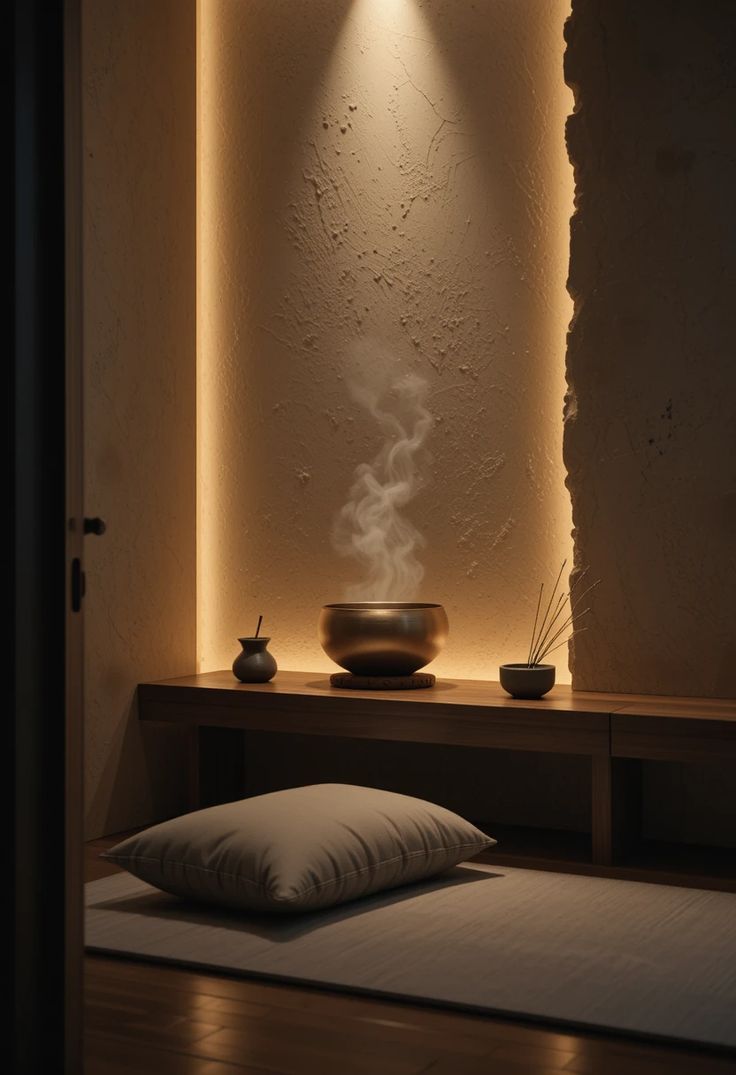
Two short sits beat one long sit. Twice-daily twenty-minute sessions produce better cortisol and heart rate variability outcomes than a single forty-minute session. The morning sit programmes the day. The afternoon sit stops the cumulative load from compounding into evening anxiety.
Protect the morning. Most people lose the practice the day they let the phone become the first input of the day. Ninety seconds of dopamine cycling sets the nervous system in motion for the next sixteen hours. Meditate before the phone. Every time.
Off-ramp the evening. A five-minute breath-led practice between work and family creates a clean signal to the parasympathetic system. This matters most for any teacher or breathwork facilitator who has been holding other people's nervous systems all day. Yours is owed.
Consistency over perfection. A daily ten-minute sit will outperform an irregular forty-minute sit every time. The meditation benefits compound through frequency, not duration. The forty-minute sit you do once a fortnight is, on the data, mostly performance.
For practitioners stacking sessions back to back, the structure that holds up is simple. A three-to-five-minute reset before each client. A longer personal sit in the morning. A closing breath practice before you walk in your front door. That structure protects your nervous system and the quality of work you give your clients.
The takeaway for wellness professionals
Meditation in a busy world is not a softer version of the tradition. It is a different design for a different nervous system. The teachers who get this, who teach formats that work with the modern attention economy instead of against it, are the ones whose clients come back. The ones still defending the forty-five-minute silent sit as the only real meditation are losing their rooms.
The Vedic tradition and TM lead the field for one reason. They were designed for householders with full lives, not monks. Mindfulness meditation holds up when it is delivered through the structured eight-week MBSR format and starts to slip when it is not. Breath-led, sound-led, and Nidra-based work earn their place when the right client meets the right moment.
The professionals worth watching over the next decade are the ones treating meditation as a craft to be designed, not a tradition to be preserved. If you are a yoga teacher, a meditation instructor, a breathwork facilitator, or a sound healing practitioner thinking about your next round of meditation teacher training or your next personal meditation course, choose for the nervous system in front of you, not the one in the texts.
Wellsphere is built for professionals taking the work seriously. Browse the curated teaching opportunities on the platform. The magazine is where the rest of this thinking lives.
Subscribe
Weekly insights,
delivered with intention
professionals every week.