
Table of Content
Wellness Tourism Is Booming: What Hotels Need to Do Now
Wellness tourism is growing rapidly, with more wellness travelers seeking new experiences. Here is what hotels need to do.
A guest walks into a luxury property in Tulum last month. Before she has even dropped her bags, she asks three questions at the front desk. What time is the sunrise breathwork class? Is the water in the room filtered or bottled? Can she book a one-to-one with a practitioner, not a generic treatment? She is not a niche traveller. She is the new baseline. And she is why wellness tourism is the fastest growing segment in hospitality right now.
Something has shifted in how people choose where to stay, what they are willing to pay, and what they expect when they get there. The Global Wellness Institute puts the wellness tourism market at over $800 billion, with projected growth to more than $1.3 trillion by 2028. Tourism is a growing global market, and within it, wellness travel is expanding roughly twice as fast as conventional travel. Hotels that treat this as a trend will lose ground. Hotels that treat it as the new operating standard will define the next decade.
This piece is for operators, GMs, brand directors, and property owners. It is for those who want to understand what wellness tourism actually is, who the wellness tourists are, what they want, and what it takes to build offerings that earn real revenue, real retention, and real reputation.
What Wellness Tourism Actually Is
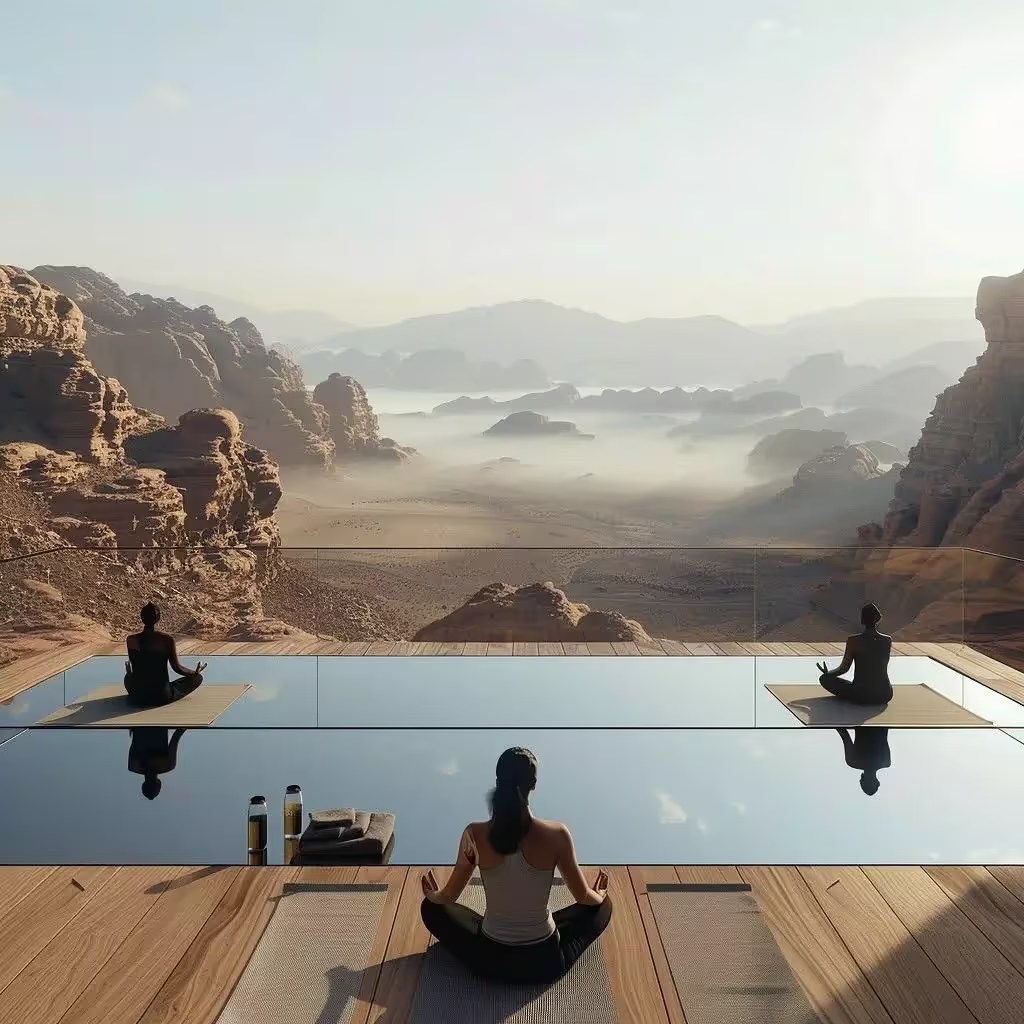
Wellness tourism refers to travel associated with the pursuit of maintaining or enhancing personal health and wellness.
That is the accepted industry definition, published by the GWI. The organisation also runs the annual Wellness Summit and defines wellness as an active pursuit of activities, choices, and lifestyles that lead to a state of holistic well-being. In practice, a wellness trip is any journey where physical and mental well-being, mood, or spiritual practice is a meaningful reason for going.
The institute splits travellers into two groups every property should understand. Primary wellness tourists book specifically to pursue wellness experiences: a retreat, a yoga week, a medical tourism programme. Secondary wellness tourists are on a trip for another reason (business, leisure, family) but still want wellness offerings to be part of the experience. Primary and secondary wellness tourists together account for billions of trips a year, and secondary travellers alone make up around 89 per cent of wellness tourism expenditures worldwide. Many operators assume this market is only relevant to guests at dedicated wellness resorts. They are missing the bigger number.
The market also splits by geography. International wellness tourism is the smaller but higher-spending group, often paying a significant premium to cross borders for specific wellness traditions. Domestic tourism is the larger volume, driven by short breaks and weekend trips. Both are expanding, and both behave differently. If you run a property, you need to know which one you are building for.
This is a distinct type of tourism. It is not leisure with a massage tacked on.
Why Wellness Tourism Is Growing So Fast
The rise of wellness tourism is not random. Four forces are driving it, and each one has a decade of runway left.
The first is the burnout economy. Guests arrive at holidays already broken. Sleep debt, chronic stress, screen fatigue. Travel has become a recovery mechanism. A 2024 American Express Travel study found 68 per cent of travellers are prioritising trips that reduce stress and improve their mental health, a figure that has climbed every year since 2020. Guests are not asking for a break from work. They are asking for a reset to their nervous system, and the mental health benefits of a well-built programme are now the primary driver for under-40 guests.
The second is demographic. Millennials and Gen X are the highest spending guests in this space, accounting for around 35 per cent of expenditures between them. They have disposable income, they grew up on the language of wellness, and they expect operators to meet them there. The older assumption that this is a baby boomer spa market is out of date.
The third is medical. The line between a wellness vacation and health tourism is blurring. A guest might book a stay that combines sleep diagnostics, a nutritionist consult, and a thermal circuit. Properties in Germany, Thailand, Costa Rica and Mexico have been building this model for years. North American and European operators are now catching up.
The fourth is supply. This field has professionalised. Practitioners who used to work freelance now run full business models. Retreat venues run year-round programming. This space now has real infrastructure, which means guest expectations are trained and consistent wherever they travel.
None of this is a wave to ride. It is the new baseline for guest expectations.
The Outcomes Guests Are Actually Paying For
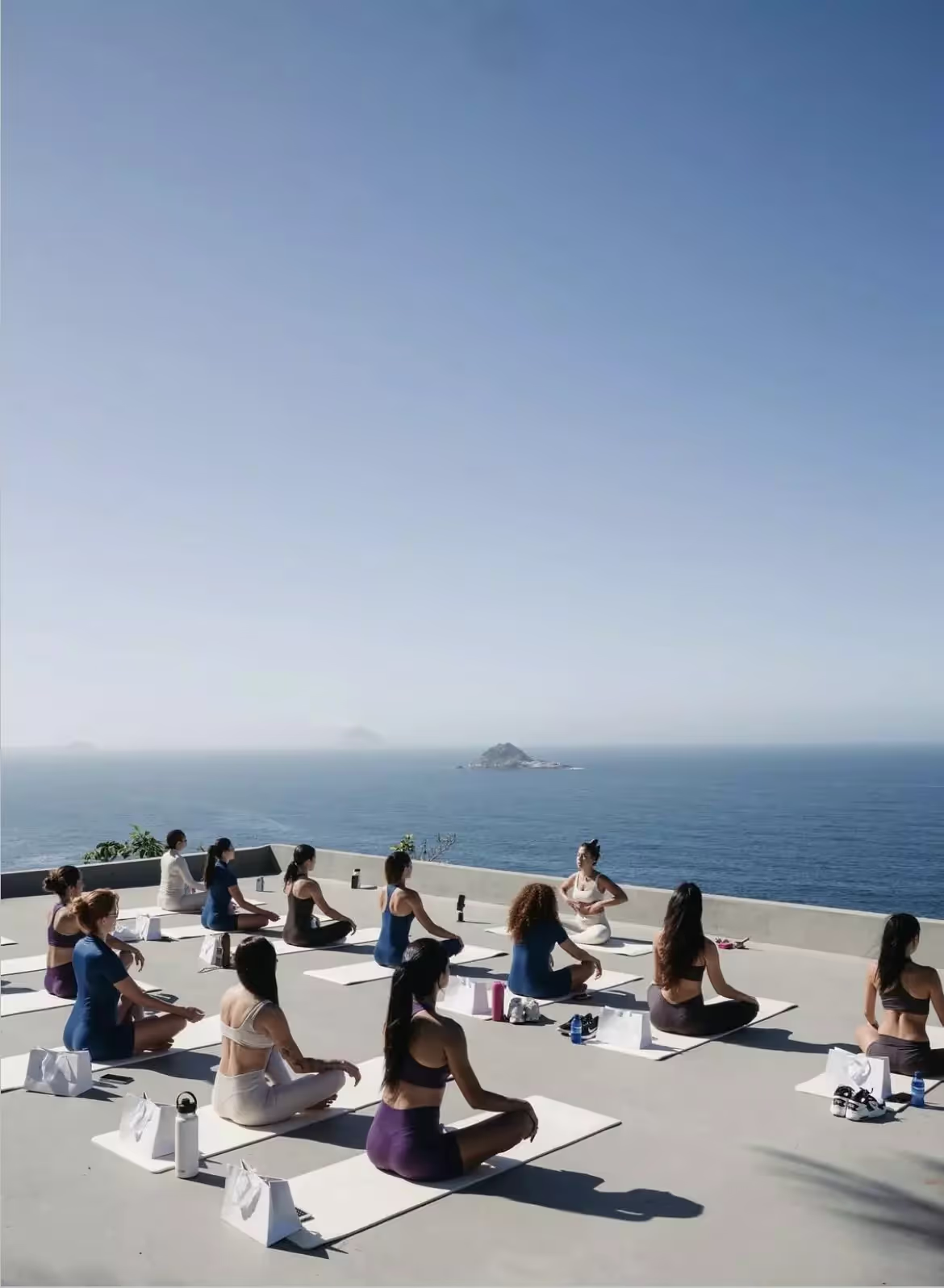
If you want to build for this guest, you need to understand what they are paying for. It is not a robe and a pair of slippers. It is a specific set of outcomes they believe they can access on your property faster than at home.
Here is what guests are actually trying to achieve, based on data from the Wellness Tourism Association and a 2024 McKinsey consumer survey. The health benefits of wellness tourism break down into a handful of recurring themes.
- Better sleep. Cited as the number one reason guests book this kind of travel. Improving sleep quality, not just adding hours.
- Stress reduction and relaxation. Guests want to feel different, not just look rested. Real nervous system downregulation, not a candle.
- Physical health gains. Improved mobility, energy, digestion, and weight management are key outcomes sought by wellness travelers. Measurable change.
- Mental and physical well-being together. Clearer thinking, better mood, a body that moves well. The benefits of wellness travel sit at this intersection, not at either extreme.
- An overall sense of wellness. A vague but real desire to reset, feel grounded, and return to a healthy lifestyle. Ease counts here too.
None of this is abstract. Guests are buying outcomes. Which means your operation needs to deliver them, or at minimum create the conditions where guests can self-deliver. The operators winning in this space have stopped selling amenity and started selling change.
Types of Wellness Tourism to Build
There are now well defined categories, and a smart operator picks one or two to build properly rather than offering everything. The segments on offer today range across spa circuits, retreat formats, nature programmes and sleep labs. Guests can tell when a property is running ten services at a surface level, which can deter wellness travelers seeking genuine experiences. They can also tell when one is built with intention. That gap between surface-level and real experience is exactly where most properties get it wrong, something you see clearly in working at wellness retreats as a yoga teacher.
The categories worth knowing.
- Spa and wellness. The classic, still the largest group. Treatments, saunas, steam, hydrotherapy. Around 40 per cent of expenditures sit here. Every four-star property has a spa now, so the real differentiator is a curated philosophy, not a menu of 40 options.
- Yoga and meditation retreats. A distinct and expanding category. Structured programming with qualified teachers. The best formats run week-long or weekend sessions with a clear arc, not drop-in classes. This is a growing wellness sub-segment, attracting guests seeking real practice over scenery.
- Hot spring and thermal bathing. Built around natural geothermal assets or high-quality constructed circuits. Popular in Japan, Iceland, Turkey, Hungary, and regional wellness destinations across North America. Operators sitting on a geothermal asset and not using it are leaving revenue on the floor.
- Holistic health programmes. Longer, structured stays combining nutrition, movement, practitioners, and often diagnostics. These run five to ten days and are often priced above $5,000 USD per person.
- Nature and adventure wellness. Hiking, forest bathing, cold exposure, physical fitness in natural settings. Lower-cost infrastructure, high perceived value, strong appeal for wellness tourists traveling to escape cities.
- Sleep-focused programmes. Emerging fast. Dedicated sleep suites, diagnostics, circadian lighting. Early movers are pricing at a premium.
- Longevity and performance. The newest category. IV drips, red light therapy, cold plunges, blood panels. Heavily tied to the longevity conversation. Expensive to run, attracts a specific high-spend guest.
Hotel Wellness Amenities That Actually Move the Needle
Most operators treat wellness as a decorative layer. A gym. A basic treatment room. A juice bar. None of these on their own shift booking behaviour. What shifts booking behaviour is a clear offering a guest can understand before they arrive and measure by the time they leave.
Here is what actually matters, based on operator data across the field.
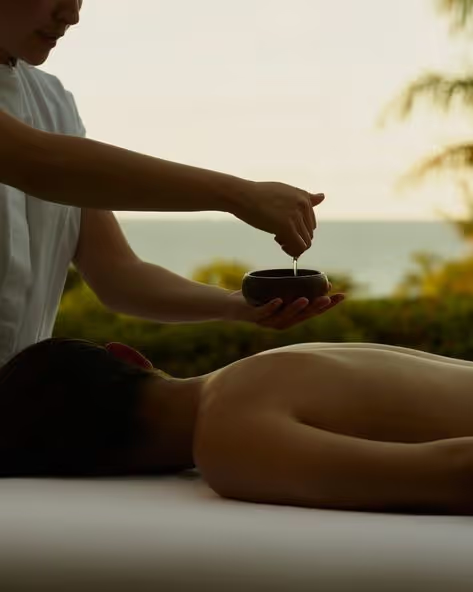
Table stakes. These are non-negotiable for any property claiming a wellness positioning to successfully attract wellness travelers. A clean, well-equipped movement studio is essential for attracting wellness travelers. A functional treatment suite with a small number of excellent options rather than a long menu of mediocre ones. Filtered water in rooms is a basic expectation for wellness travelers. Blackout curtains. A sleep-friendly room temperature option. A clearly labelled healthy menu option at every meal. These wellness facilities should work, every day, without fuss.
Differentiators. These move ADR and repeat bookings. A signature programme your property is known for, whether a breathwork circuit, a sleep protocol, a nutrition philosophy, or a practitioner-led retreat. Qualified practitioners available on site, not subcontracted last minute. A fitness or movement space running classes daily, not on request, is crucial for attracting wellness travelers. Outdoor infrastructure, a cold plunge, a sauna, a nature trail, a meditation deck. Some understanding of wellness as a coherent idea, not a list of items.
Premium moves. A thermal circuit if your geography allows. A medical arm with licensed clinicians. Sleep diagnostics. Personalised programming built from an intake form pre-arrival. These push a property into the $1,000 USD per night ADR tier.
The Staffing Problem Nobody Talks About
The weakest link in this field is almost always the people delivering the work. Not the studio. Not the fit-out. The wellness practitioners.
I have sat with directors and retreat owners for years and the same pattern comes up. A guest books a $400 USD treatment and gets a twenty-minute rushed session from someone who is underpaid, under trained, and working a twelve-hour shift. The operator wonders why repeat bookings are low among wellness travelers. Your wellness services are only as good as the people running them, and most operators treat wellness hiring as an afterthought.
How to Start If You Are Not a Wellness Destination Yet
Not every operator needs to become a full-scale wellness resort with a 30-therapist team at a dedicated destination. Most do not have the infrastructure, the land, or the capital. But every property in 2026 needs a credible offering, because secondary travellers are now the majority. Here is a phased approach that works.
Where Wellness Tourism Is Heading
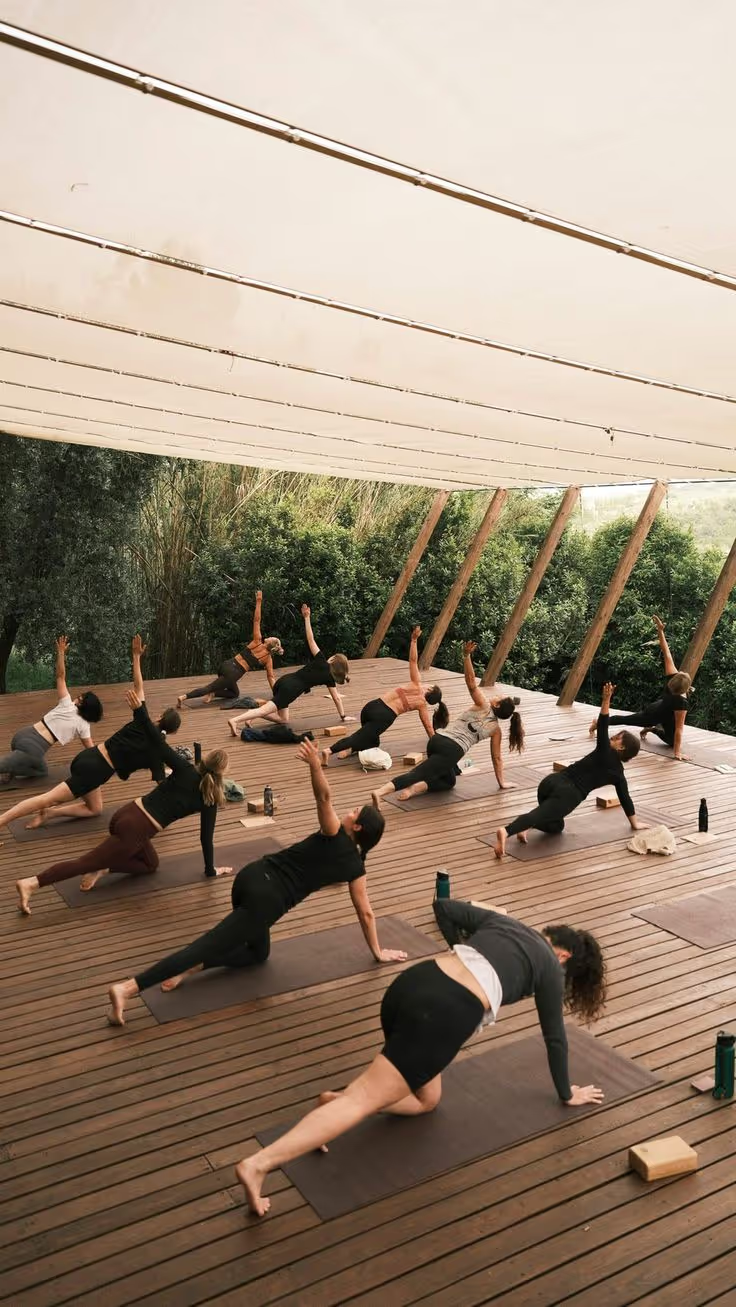
This sector will not stop growing. Wellness tourism also tracks with deeper cultural shifts. An ageing population, a mental health awareness boom, a younger generation raised on mindfulness and wellness practices, a workforce redefining rest and recovery. These are not five year waves. They are twenty year ones. Expect this to continue reshaping how wellness tourism offers are packaged, priced, and reviewed.
Final Thought
A last thought. The global wellness tourism industry has grown up fast, and the wellness economy has always been about the quality of what you deliver and the calibre of the people delivering it. Operators that understand this, that hire well, pay fair rates, and build with intention, will be the places the next generation travels to. Those that treat wellness as a marketing layer will keep losing guests who can tell the difference within an hour of check-in.
If you are hiring, building a programme, or rethinking your positioning, Wellsphere is where curated talent and operators connect. Explore roles, find people, and see what intentional hiring looks like in the health and wellbeing space, where health and well-being outcomes are the actual product.