
Table of Content
Yoga and Self-Care for Teachers: Boundaries, Burnout & Returning to Yourself
I’ve noticed a very specific kind of overwhelm that doesn’t look extreme from the outside but feels strangely suffocating from the inside. The kind that arrives quietly in the middle of a yoga studio, in the pause between cues, in the soft breath of a student settling into savasana. It’s subtle, almost invisible. A request, a question, a tiny weight — and suddenly your body tightens long before your mind catches up. This is the unseen cost of holding space, and it’s why boundaries and managing stress are important. Self-care practices are not luxuries but lifelines for every teacher who steps onto the yoga mat.
Because while we speak so often about the benefits of yoga — about the way yoga helps others manage stress, breathe deeper, or ease the mind — we rarely speak about those who guide that journey. Those who pour energy into every student, every class, every moment of stillness. Every adjustment, every gentle cue can help alleviate stress and enhance awareness for others — while the teacher quietly ignores the tightening in their own chest.
And yet, for teachers, boundaries are where healing begins.
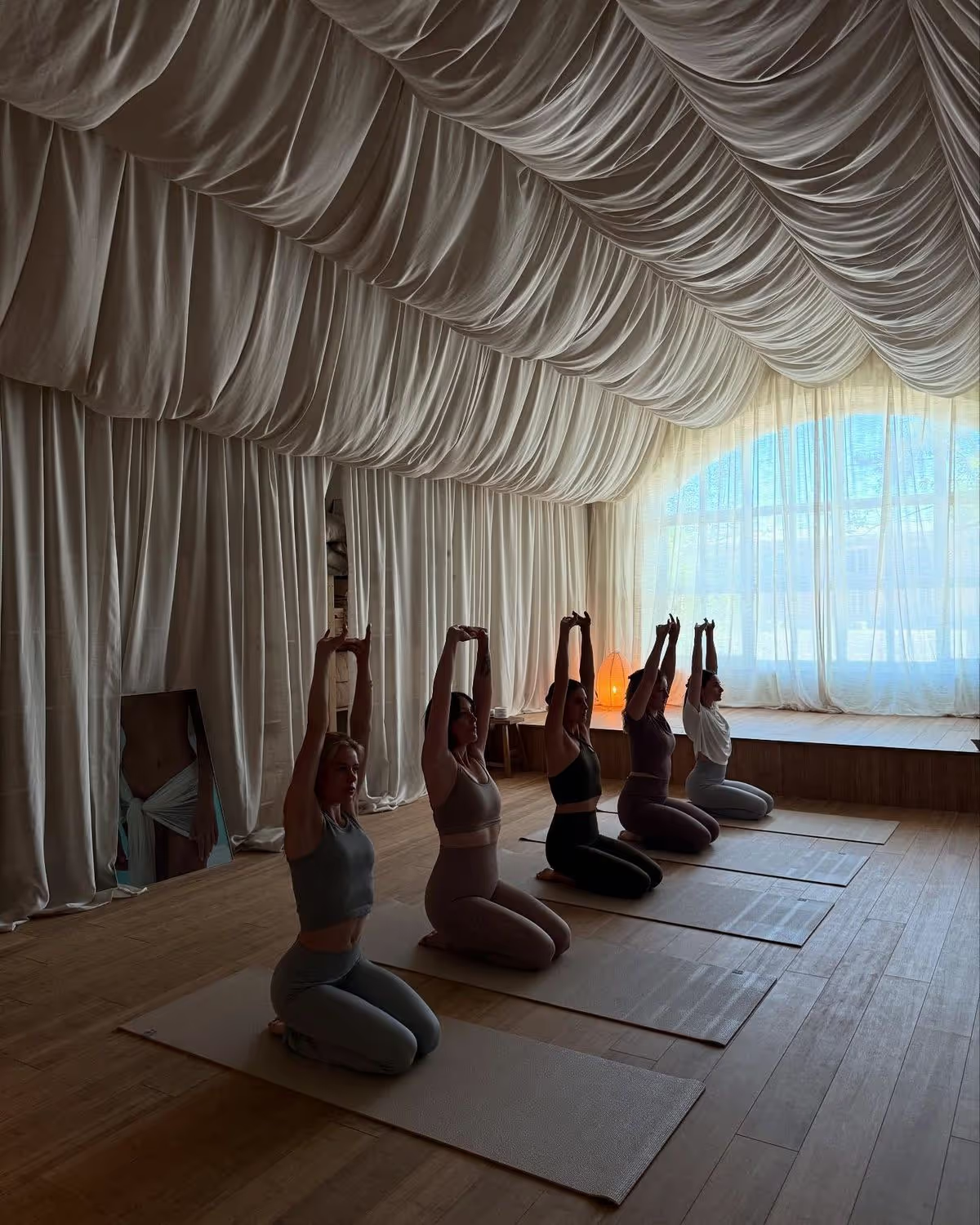
Boundaries as a Form of Spiritual Protection
When you teach yoga, you’re doing far more than demonstrating asana. You’re absorbing emotion, practicing slowing down, reading energy, monitoring breath, and offering calm even on days when your own heart feels unsettled. Without boundaries, this exchange becomes a slow leak—one that leads toward burnout, emotional fatigue, or the kind of numbness that feels like a muted version of yourself.
Boundaries are not walls. They are breath. They are the sacred pause where you inhale, return to centre, and exhale what isn’t yours to carry.
They allow your personal practice to stay alive beneath the teaching. They ensure that your weekly practice doesn’t dissolve into obligation. They keep your mental focus strong, your posture steady, your sense of self intact.
They are your spiritual “yes” and your grounded “no.”
Self-Care as Quiet Resistance
Self-care as a yoga teacher means remembering that you are a human being first, a leader second. It means honoring your own physical and mental health, tending to your levels of stress, and choosing rest before depletion.
True self-care goes far beyond baths and journaling — it includes energy protection, emotional clarity, and choosing not to abandon yourself for others.
And yes, self-care is deeply connected to your yoga practice. Practicing yoga as a teacher isn’t just about staying strong for students; it’s about returning to your own body, your own breath, your own spirit.

Why Teachers Need Evidence-Based Care Too
In modern wellness conversations, science and spirituality are not opposites—they are companions. And research confirms what your heart already knows:
Recent meta-analyses show that yoga supports stress reduction, improves wellbeing, and can help reduce stress effectively. One randomized controlled trial demonstrated significant improvement in physical and mental health in mobility and pain outcomes post-intervention, including those with chronic low back pain and other acute and chronic conditions.
Studies conducted through the National Institutes of Health on complementary and alternative medicine show significant improvements in physical and mental health. NIH research also reveals that yoga and meditation improve sleep, mood, and resilience. Another meta-analysis highlights the importance of managing stress for overall health. Studies have found reductions in common ailments, including anxiety and depression, while various trials show increased mental clarity and emotional regulation after participating in yoga programs.
Even older adults and individuals with physical limitations benefit. And yes, healthcare workers — often burned out from long hours and emotional labour - show relief when engaging in yoga intervention programs. Self-reported benefits of consciousness practices include improved emotional regulation.
This is evidence. This is resonance. This is the reason yoga’s benefits matter just as deeply for the teacher as for the student.
The Body Remembers What You Ignore
Yoga teachers often carry stress in the spine, ribs, and lower back — the same areas they help students support and strengthen.
When you teach from depletion, the body whispers first:
A heaviness. A tight breath. A familiar ache.
This is not failure — it is feedback.
When you slow your breath, rest, or choose restorative postures, something softens. Something unclenches. Even a few gentle poses practiced with intention can shift your entire inner landscape.
Because your body is the first to know when you’ve been giving too much.

Your Practice Is Your Sanctuary
Whether your personal practice leans toward Hatha, Iyengar, meditation, or slow stretching with props, your time on the mat matters.
Your practice reconnects you to why you teach.
It helps you sleep better.
It reminds you of the emotional and physical benefits of mindfulness and conscious movement.
Your movement practice is not indulgent - it is maintenance.
Your yoga therapy tools are not optional - they are necessary.
Your time alone on the mat is not selfish - it is sacred.
You Are Not Just a Teacher
Teachers often underestimate the energetic load they carry, especially when leading large groups. Holding space is emotional and energetic labor. It asks your nervous system to stay open, attuned, and responsive.
Without boundaries, your spirit begins to fray.
Yoga and meditation become your anchors. Together, they form a loop: grounding, clearing, replenishing.
Research within complementary and alternative medicine supports this. Across disciplines, yoga has been shown to improve resilience, reduce tension, and create measurable benefits for both physical and mental health.
This isn’t softness.
This is strength.

Self-Care Is Part of Your Purpose
When you care for yourself, you’re not stepping away from your students—you’re stepping toward them with a fuller presence. When your cup is filled, your teaching expands. When your nervous system is settled, your compassion deepens.
Set the boundary.
Take the pause.
Honour the whisper before it becomes a scream.
Because boundaries are love in action.
Because self-care is devotion.
Because your students gain more from your wholeness than your sacrifice.
And because every time you step onto your yoga mat, you are reminded that healing is not something you only offer - it’s something you deserve.